
544 University Ave
Haava-Jaird’s Landscape Refresh
LANDSCAPE DESIGN | YOUR PLANT LIST | PLANT LIBRARY | MATERIALS LIBRARY | FOCUS AREAS | GET INTO THE GARDEN | YOUR PHOTO ALBUM
We Will Schedule
2-3 DESIGN MEETS (Feb-Mar) | with 3 STEPS TO EACH REVISION
THESE 3 STEPS WILL BE COVERED (VERBALLY + VISUALLY ARTICULATED) AT EACH DESIGN REVIEW
YOU CAN BRING YOUR OWN NOTES TO EACH MEET + WE WILL ALSO INVITE YOUR LIVE RESPONSE DURING THE MEET
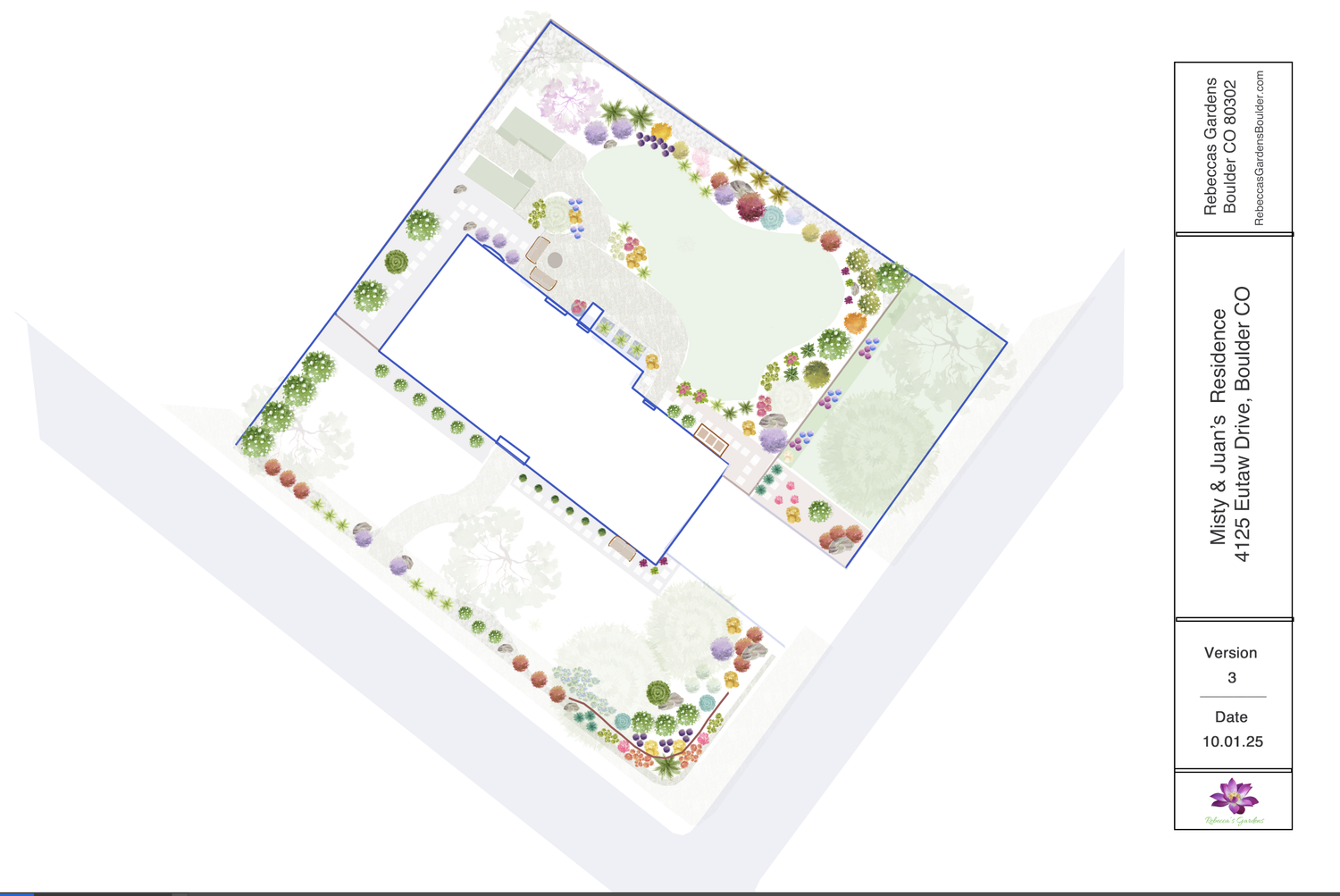
WORKFLOW
General Design ‘Big Brush Strokes’
Spatial Layout + Aesthetic Preferenes
Hardscape + Softscape
STEP 2: HARDSCAPE SPECIFICS
MATERIAL OPTIONS | YOUR MATERIALS LIST
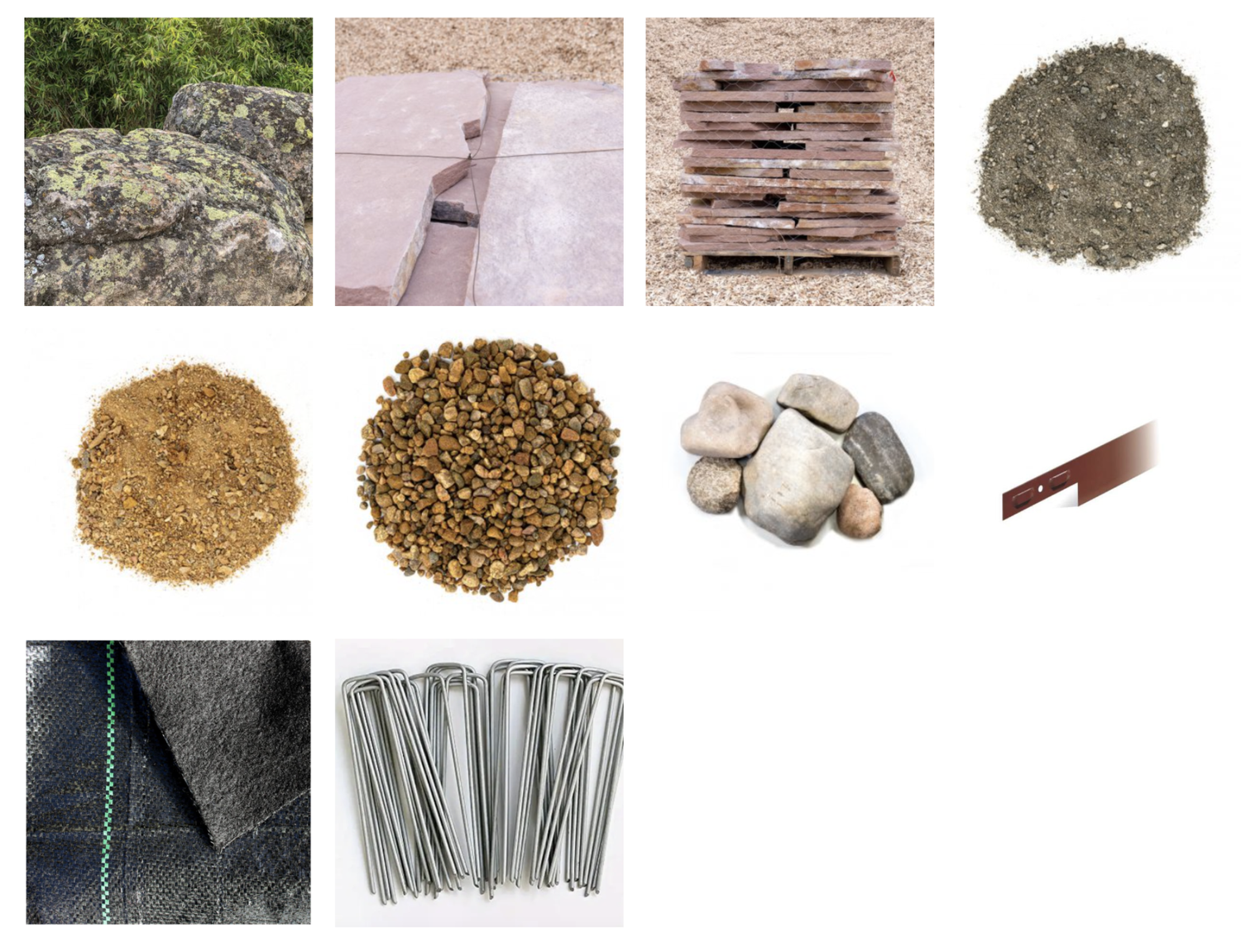
WORKFLOW
Get more specific ‘Honing + Detailed Preferences’
Design Layout of HARDSCAPE areas +
Material Selections of hardscape features
STEP 3: SOFTSCAPE SPECIFICS
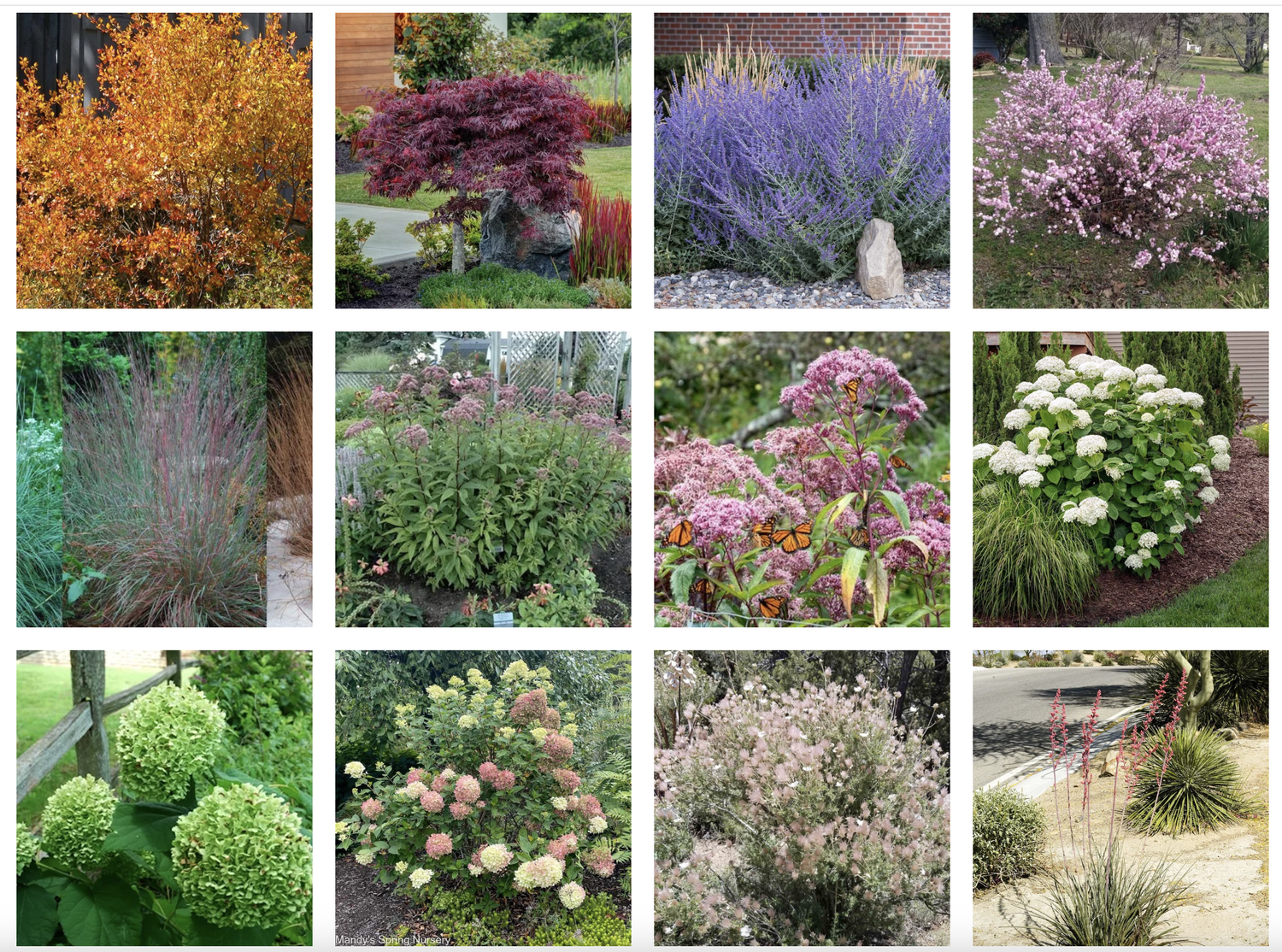
WORKFLOW
Get more specific ‘Honing + Detailed Preferences’
Design Layout of SOFTSCAPE areas +
Plant Selections, or Softscape features
YOUR DESIGN (v 1.0)
BACK YARD | SOFTSCAPE
THEME : SEMI-NATIVE, LOW-WATER USE
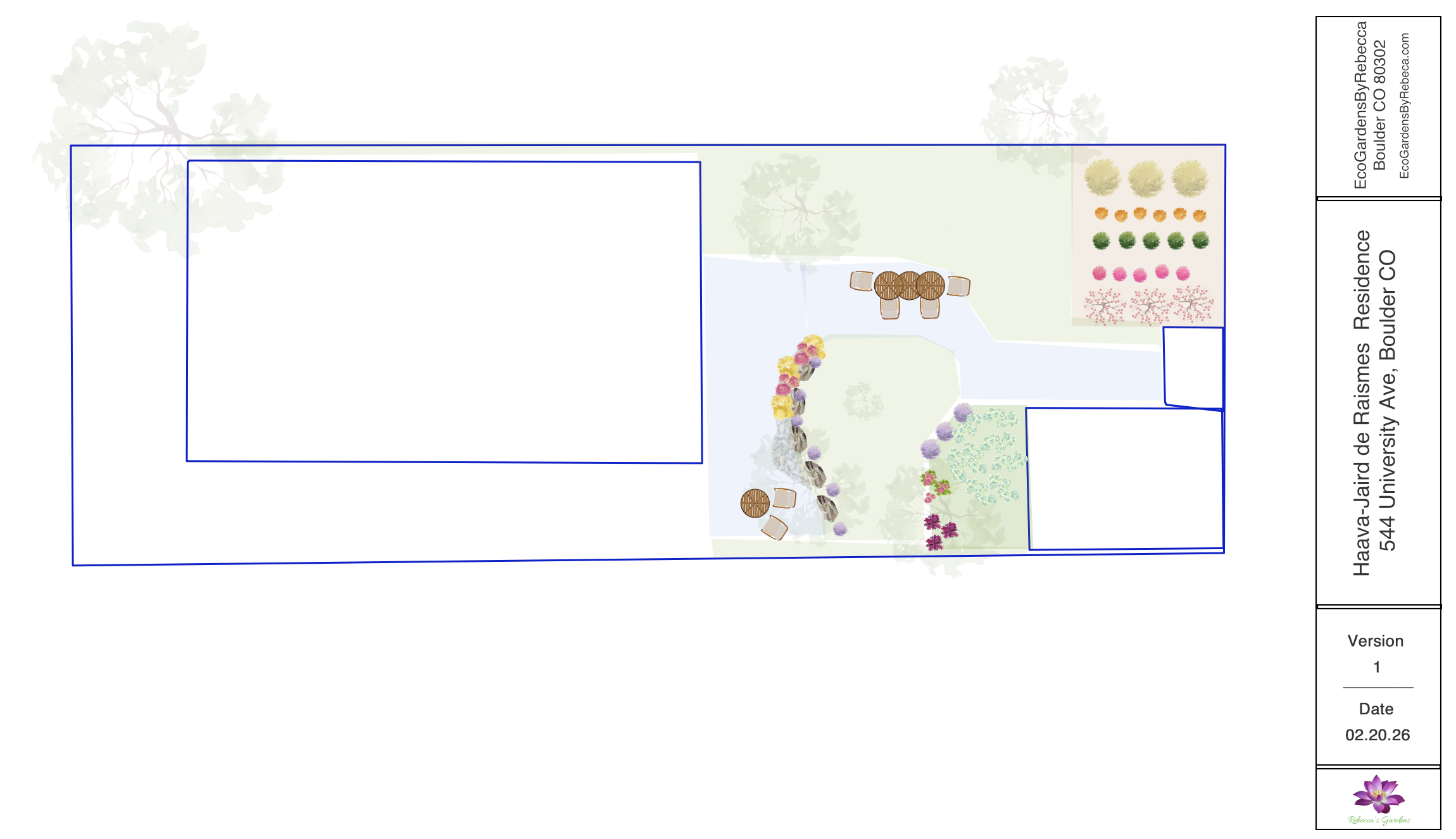
Back Gardens
DESIGNATED AREAS
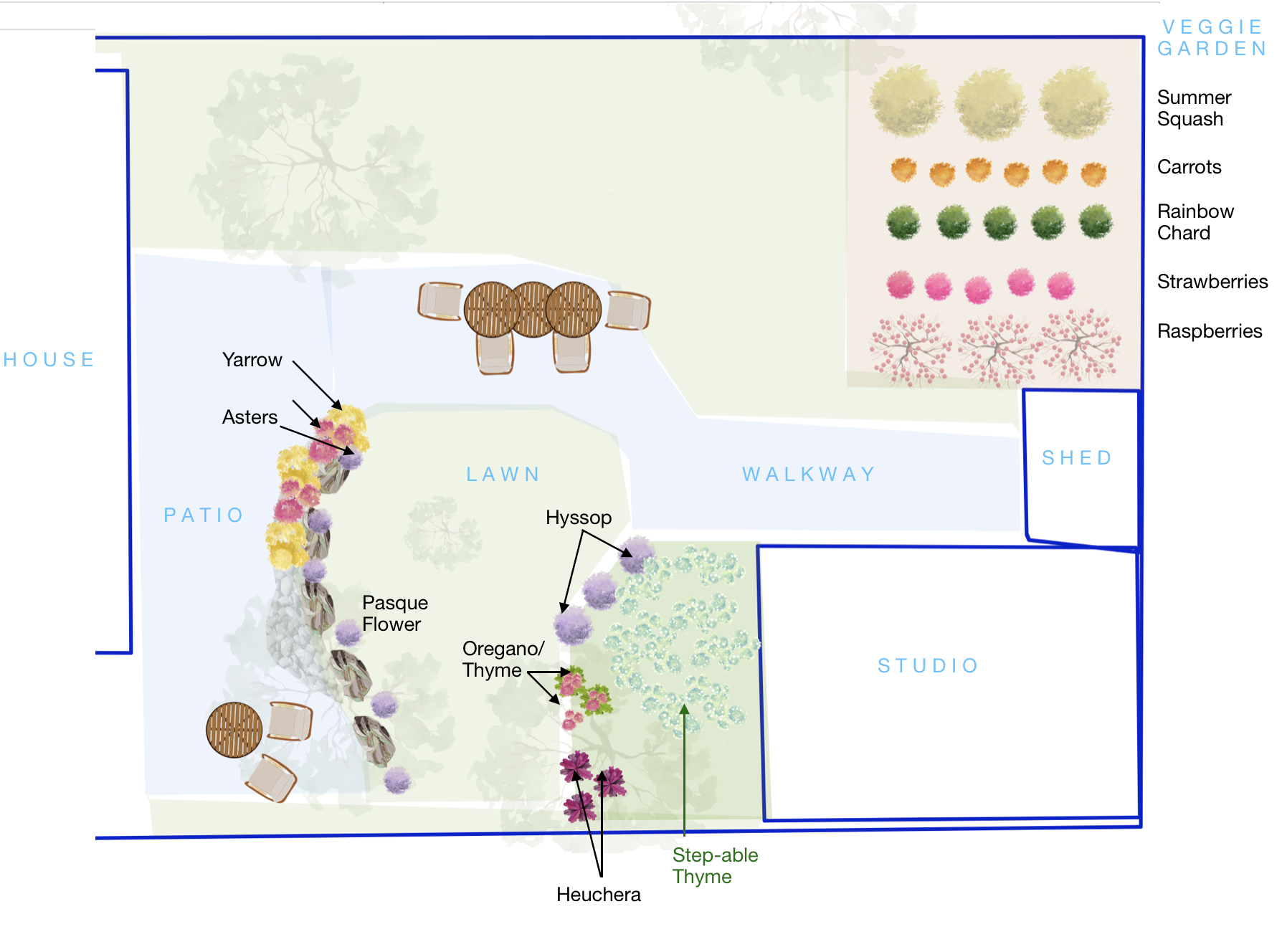
Inspiration
LOW DECORATIVE BOULDERS CREATING BALANCED TERRAIN
MIX OF LOW WATER NATIVE + REUSE OF EXISTING PLANTS


Plant Library
A COLLECTION OF RELEVANT PLANTS + SOFTSCAPE FEATURES AMONG WHICH TO BROWSE
SEE LINE ITEMIZATION (BELOW THE IMAGES) FOR YOUR PROJECT-SPECIFIC LIST OF CURRENT CONFIRMED CHOICES
Your Plant List
COMMON + BOTANICAL NAMES | MATURE SIZE + SPREAD | QUANTITY | DETAILS
Current Plantings
Original Recommendations
SAMPLE Materials Gallery + List
RECOMMENDED MATERIALS | QUANTITY OR SIZE | DETAILS

Areas Of Focus
For Your Garden This Season
√ ONCE A MONTH CO-MAINTENANCE
√ MONTHLY D. I. Y. CHECKLIST
$59/mo
1st Half = MAY-JUN-JUL | 2nd Half = AUG-SEP-OCT
Join Rebecca In The Garden Once A Month For A Guided Hands-On Maintenance Session Based On Whatever Your Garden Needs At The Time
Work + Learn Alongside Rebecca. Once You Get Your Momentum Going, You Can Select To Continue For The Second Half Of The Season!
TOPICS COVERED:
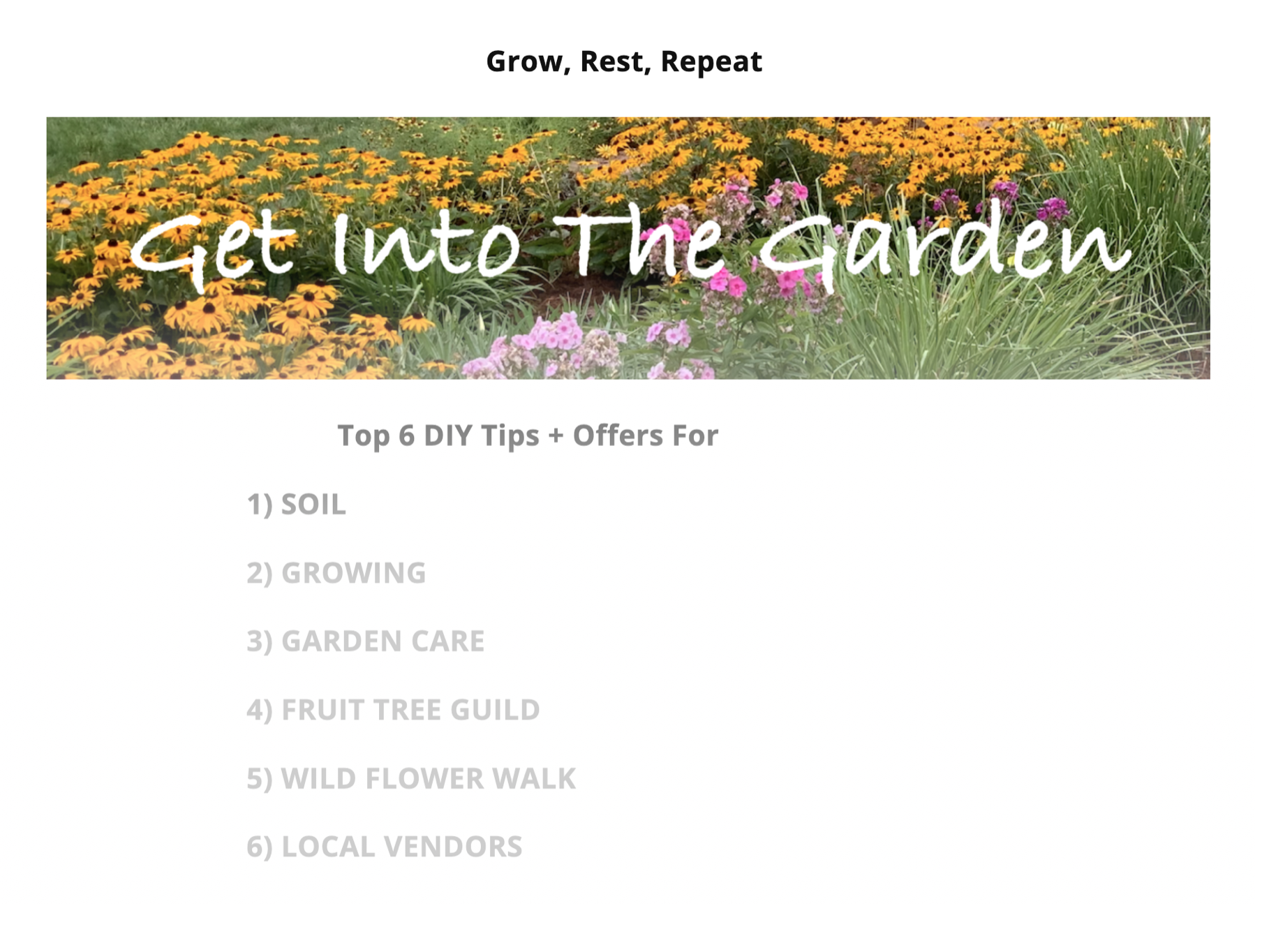
Your Monthly Consults May Include

How To Assess + Amend Your Soil
THE HEALTH OF YOUR PLANTS IS DIRECTLY RELATED TO THE QUALITY OF YOUR SOIL


Additional Natural Products
CLICK HERE FOR A FULL LIST OF RECOMMENDATIONS
for horticultural and vegetable gardens
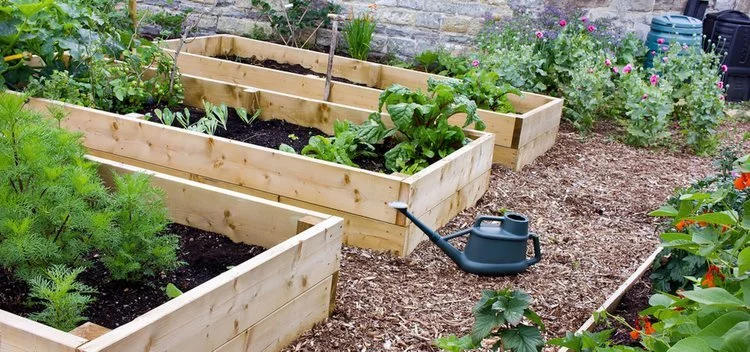

What To Do As Your Plants Grow

Optional DIY: Watch Others Do It + Then Try It Yourself
We Suggest The Following YouTube Channels As You Learn The Art/s Of…


Better Your Garden Game!
√ Get A Hand Getting Started With A 2 Month Pack
√ Meet Up Monthly To Garden Together DIY


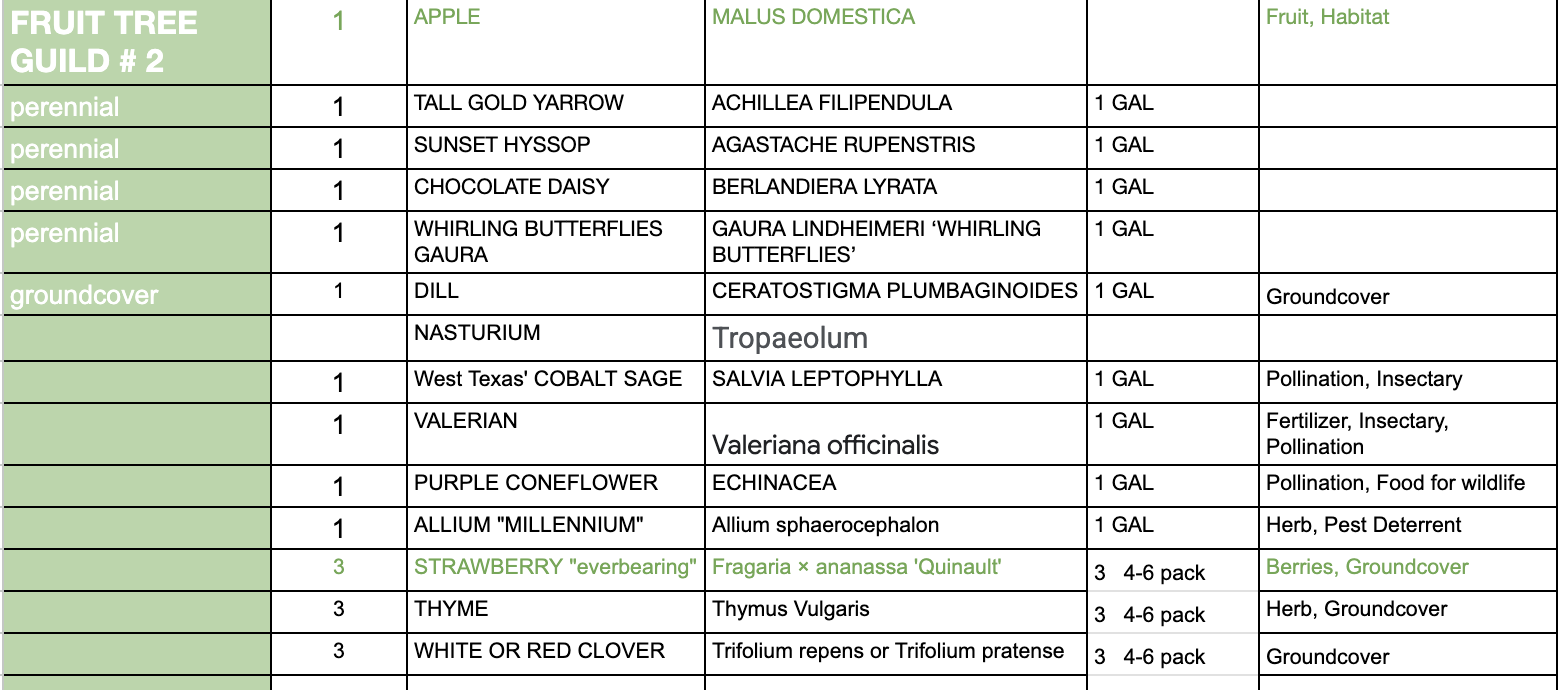
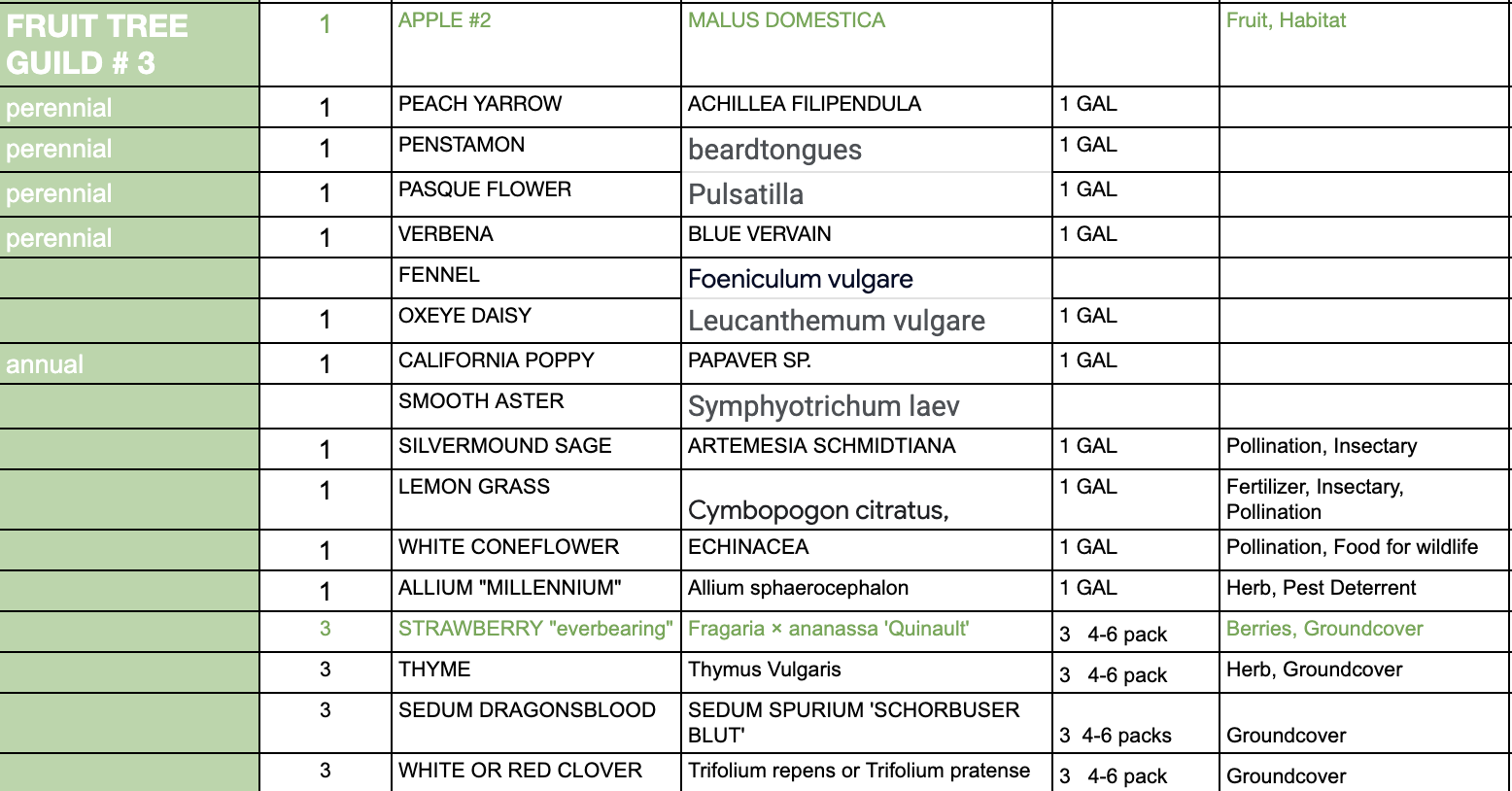
Pick Plants That Support Your APPLE Tree
A FOCUS ON BALANCING YOUR GARDEN FOR HEALTH + HAPPINESS
Guild lists courtesy of Rebeccas Gardens for Front Range microclimate species.
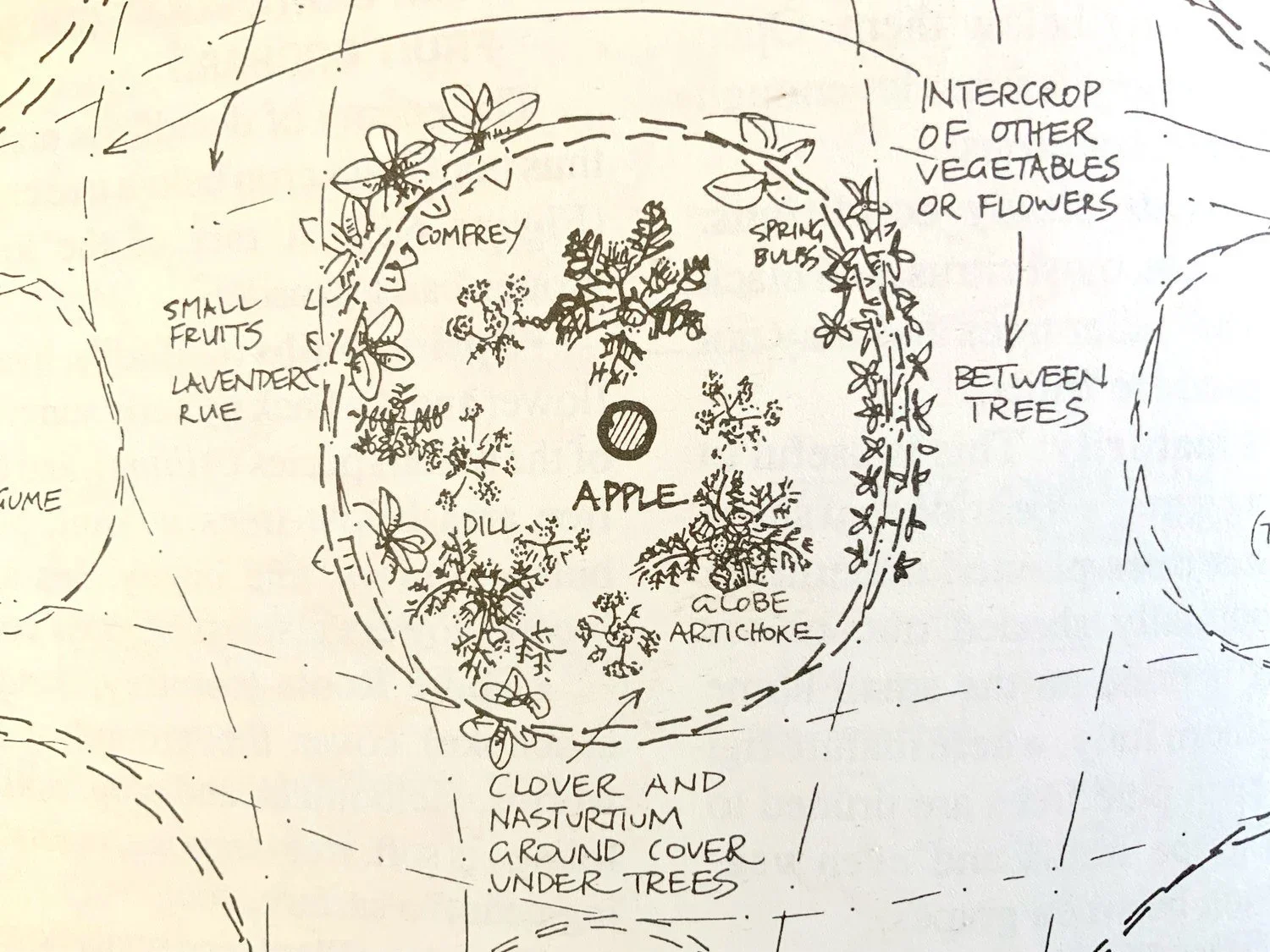
Guild lists courtesy of Rebeccas Gardens for Front Range microclimate species.
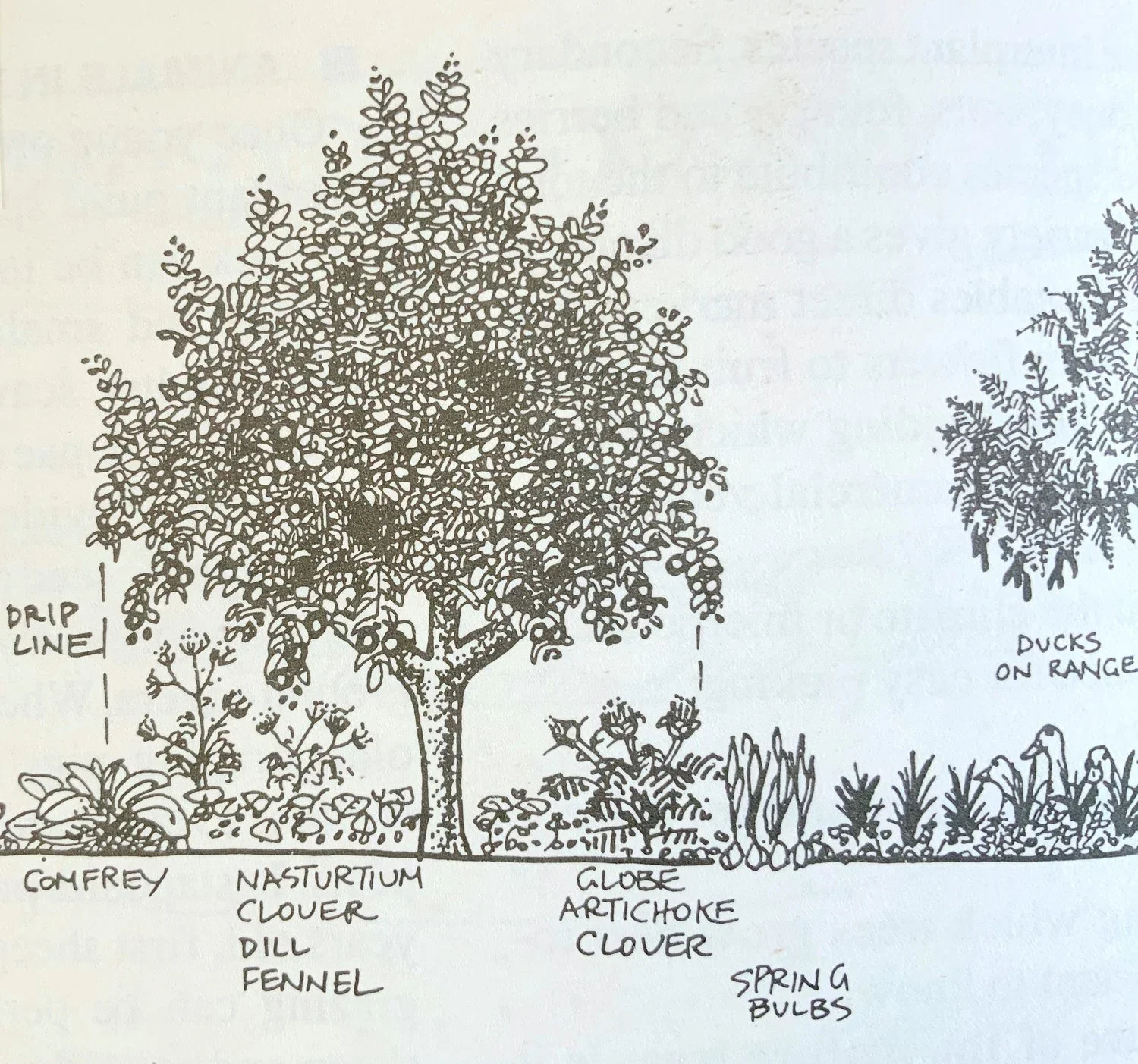
Images courtesy of Introduction to Permaculture by Bill Mollison for spatial layout.
How Do Plants Work Together?
DEFINITION A plant guild is a community of plants that grow and support each other by recycling nutrients back into the soil, providing shade and conserving water, attracting beneficial insects, repelling pests and diseases, building soil, and preventing erosion. In other words, they’re like each other’s best friends helping to share their unique skills and benefit the collective in their little location (aka micro-climate). They each help one another to be their best in the bio-chemistry and ‘social’ environment.
DRIP LINE LAYOUT Main guild plantings are spaced most prominently within the circular area that defines the ‘drip line’ of the tree. The drip line is the area within which rainwater drips down from the trees leaves, forming a circle on the ground around the outer edge of the trees branches, mirrored by its root system underground. Just within the drip line is the area where the roots of the tree will most actively integrate with companion plants. This is because the tips of the roots are the most active and are always located near the drip line, reaching further out as the growth of the tree evolves. Specifically, this is where the tree has the most synapses for interchanges within the soil, including water and nutrient uptake. Additional plantings may fill the space outside the drip line or the space that defines the garden between trees.
Aesthetically, your creativity is primary! But in addition to your garden artistry, here are the logistical components that may help you decide what will go where for the needs of your unique guild or garden:
6 Main Balancing Components To A Guild
√ ATTRACTORS Great for bringing pollinators to the garden! >> Cosmos, Catmint, Sunflowers, Valarian, Sages/Salvias, Zinnias, Snapdragons, fennel, dill, lavender
√ REPELLERS Pest deterrents are a must as well. >> Allium (aka onion-family like Leeks, Chives), Garlic, Oregano, Geraniums, Marigolds, Mums, Daffodills, etc
√ NITROGEN FIXERS The ‘fertilizer’ for your tree, pulling nitrogen into the soil. >> Clover, Vetch, Legumes (clovers, beans, peas, lentils, peas, chickpeas), silverberrry
√ MULCHERS Can be cut and sprinkled around the tree like mulch which helps with water retention and soil protection. >> Comfrey, Vetch, etc, or hay or woodchips.
√ ACCUMULATORS Rejuvenate the soil by pulling up and replenishing nutrients. >> Borage, Comfrey, Chickweed, Yarrow, Nettle, Strawberries, Sorrel, Vetch etc
√ SUPPRESSORS Help suppress weed growth, like ground covers with interwoven root systems. >> Clover, Thyme, Sedum, Strawberries, etc
What Grows Well with Fruit?
FOR EXAMPLE… WE’LL INTRODUCE YOU TO A FEW GUILD STAPLES HERE SO YOU CAN SEE WHAT THEIR SPECIALTY IS IN HELPING BALANCE THE GARDEN.
PLEASE REFER TO YOUR GUILD LISTS ABOVE FOR MORE VARIETY SPECIFIC TO YOUR MICROCLIMATE:
Comfrey – Comfrey roots grow deep into the ground, helping to pull nutrients and minerals from the soil. Because it’s such a vigorous grower, comfrey out competes weeds. Freshly cut comfrey serves as rich, nitrogen-rich mulch. Be sure to plant comfrey where you want it, because once established, it’s probably going to be there for a very long time.
Marigolds – Marigolds attract pollinators, but that’s just the beginning. These cheery plants also discourage nematodes in the soil and a variety of other pests above the soil. Marigolds tend to self-seed, so you may need to plant them only once.
Lupine – Lupine is a member of the legume family and, like all legumes, it fixes nitrogen in the soil. As an added benefit, the beautiful blooms attract several species of butterflies. Other types of legumes, including peas or beans, can provide the same results.
Nasturtiums – Nasturtiums are believed to discourage codling moths, a scourge that can plague several fruit trees, including apples. Plant nasturtiums seeds at the base of trees.
Hyssop – Hyssop is an attractive herb with a bitter aroma that discourages pests. Hyssop makes a great companion plant for all types of fruit, including berries.
Chives – Chives produce pretty blooms that attract bees and other pollinators, but the onion-like smell keeps pests at bay. Garlic provide similar benefits.
Echinacea – Echinacea is a pretty, drought-tolerant daisy cousin. The long taproots loosen the soil and make deep nutrients and moisture more available to fruit trees.
Lavender – Lavender smells great, but the aroma confuses pests and often sends them packing. Rosemary has a similar effect, and both attract pollinators.
Fennel – Fennel is an herb that attracts parasitic wasps, beneficial insects that help control a number of pests. Dill, mint, basil and coriander provide similar effects, and you can also snip a bit of these herb plants for use in the kitchen.


Local Nurseries + Vendors We Recommend

Find your seeds or plant starts here, as well as tools, materials, and more! We’re pleased to share the health and the wealth of opportunity among these associations from our many professional and social circles. Rebecca’s Gardens Design makes it our goal to stay as consistent as possible with the larger picture holistic ecological values for plants, people, and our planet. Thank you for your commitment to sourcing biodynamic or organically grown plant species or varieties, soil, or other products.
GOT INSTALLATION?
We Recommend Installation Specialists
Your Photo Album
BEFORE
CONCEPT
AFTER
Your Budget To Date
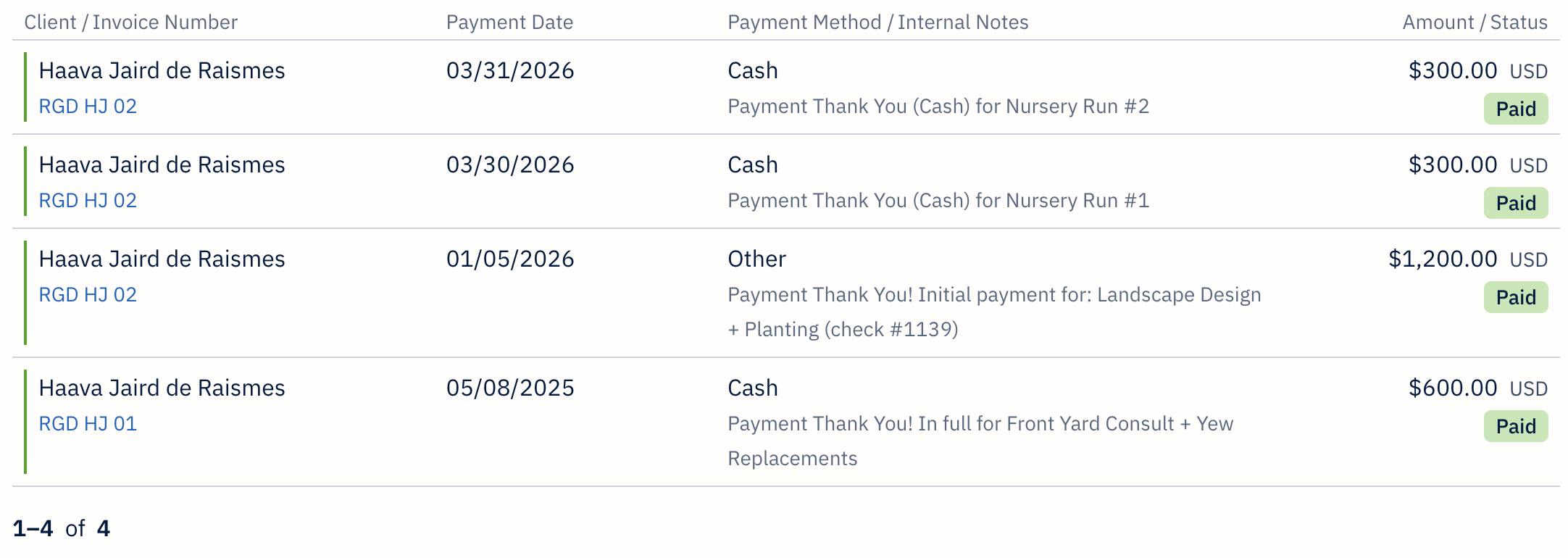
To date, you’ve saved 20% including —
$120 off consults + recommendations
• $162 off of project management
• $111 off of sourcing + delivery
Thanks for designing and growing with Eco Gardens By Rebecca!
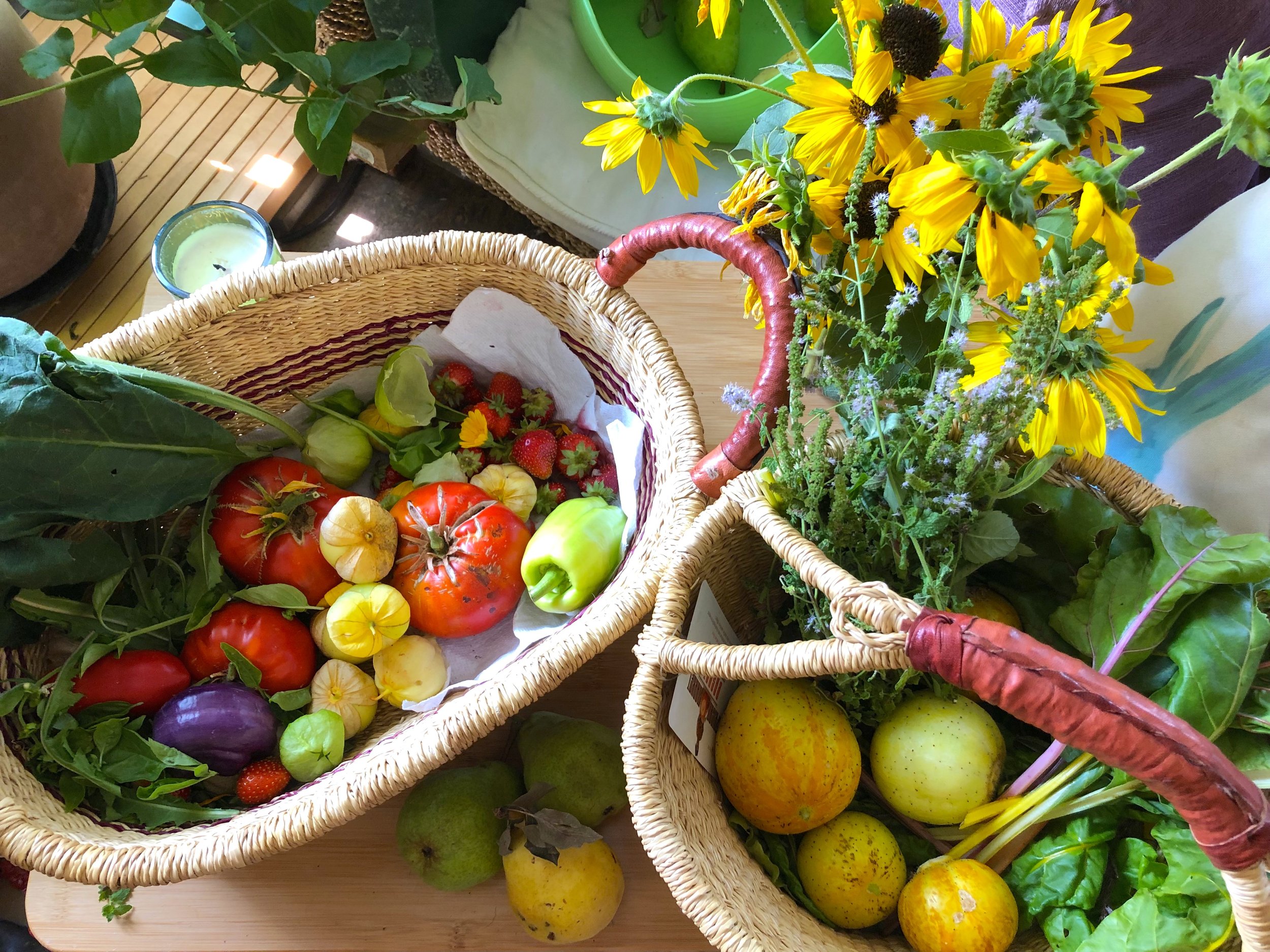
A Fun Harvest Mid-season
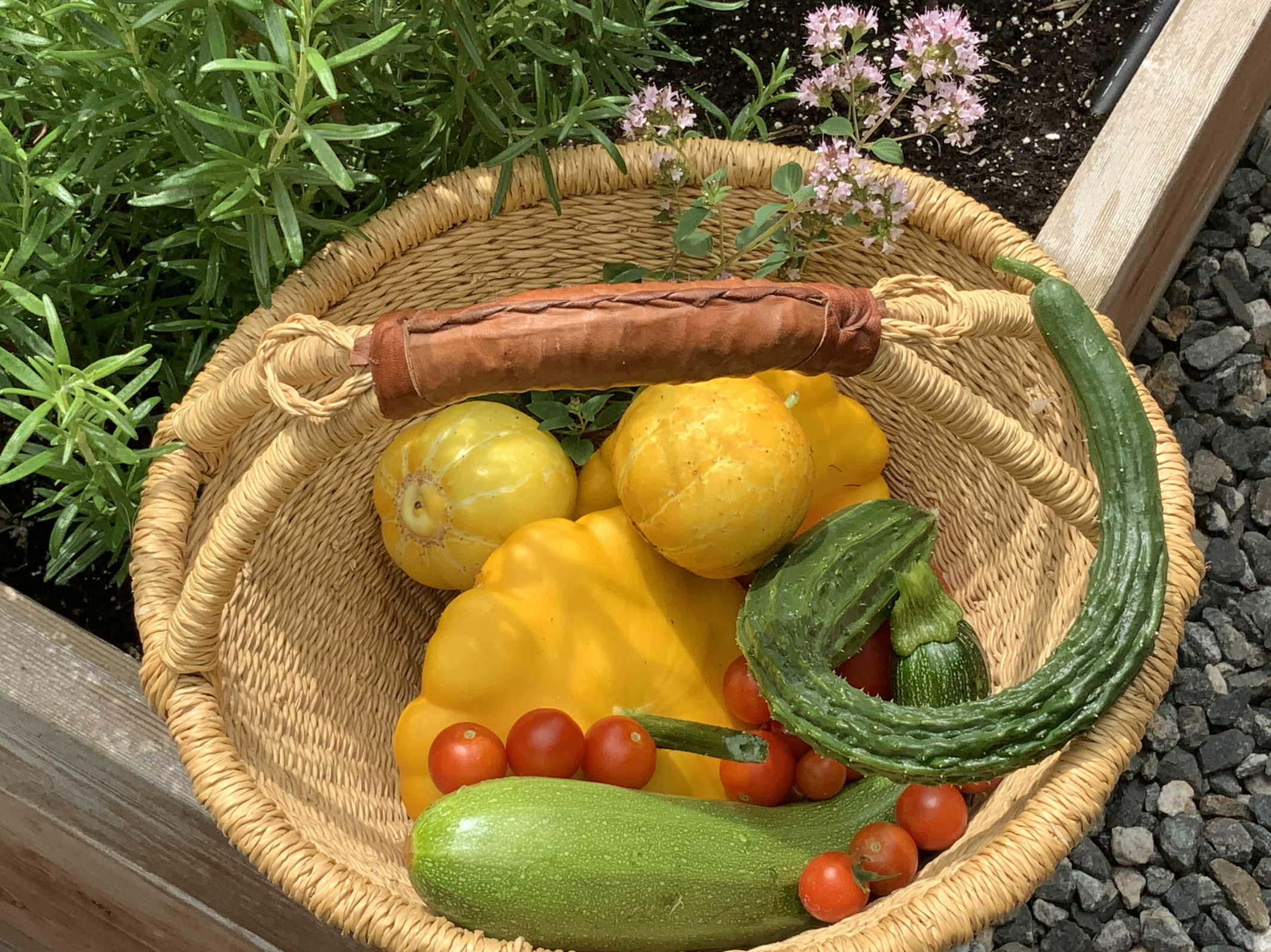


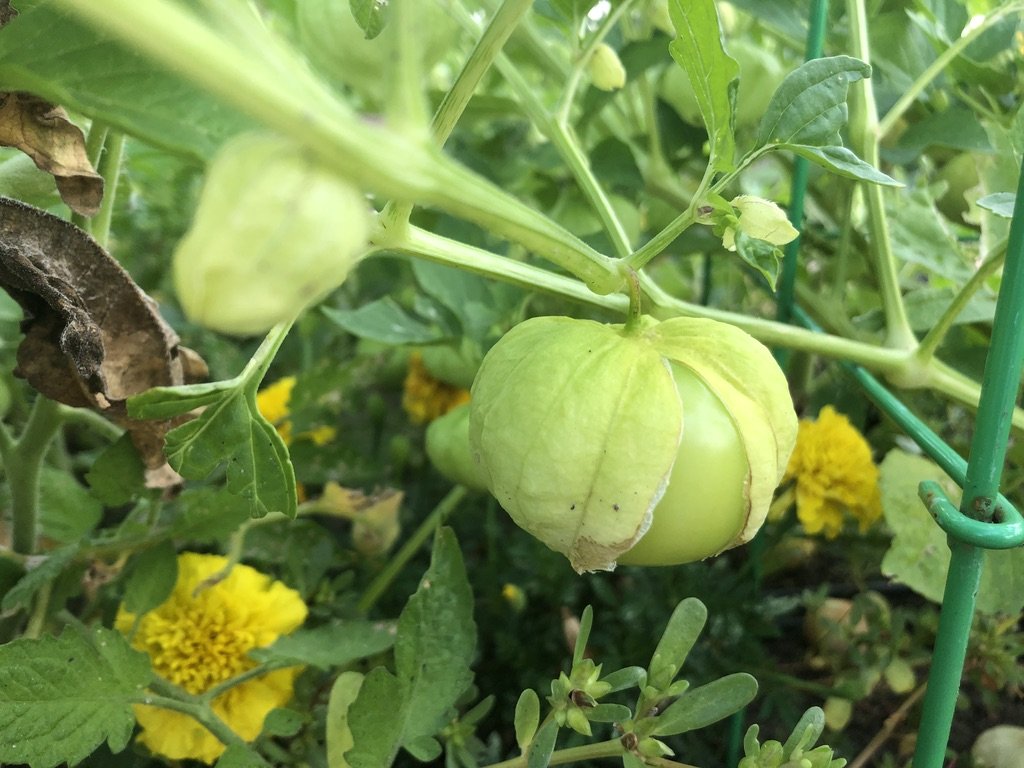
Tasty healthy food
