
11403 53rd Place, Arvada CO
Karolyn’s BACKYARD REFRESH
CONCEPT | LAYOUT | MATERIALS | PLANTS | FLOWER BED THEMES | VEGGIE CALENDAR
DESIGN WORKFLOW
CONCEPT → IMAGES TO HELP WITH VISUALIZATION (ECO GARDENS BY REBECCA)
2D LAYOUT → FUNCTIONAL MASTER PLAN (ECO GARDENS BY REBECCA)
REQUIREMENTS → HOA OR CITY CHECKLIST (WATER WISE / WUI OR FIRE RESILIENT / COOLING)
INSTALLATION → CUSTOM BUILD (A GOOD EARTH MAINTENANCE)
RESILIENCE GUIDE → RECOMMENDED SEASONAL GUIDELINES (411 FOR YOUR MAINT CONTRACTORS)
Installation Schedule
✔ GOAL = BY OCT 23 RD 2026 | INSTALL = 1 WEEK OR LESS
OCT
WEEK 1 (5th - 9th)
✔ Finalize Design + Submit for HOA Approval
WEEKS 2-3 (12th - 23rd )
✔ Receive HOA Approval +
WEEK 3 or 4 (19th - 30th)
✔ Labor for Hardscape
GOAL = END OF OCT
SPRING 2027
✔ DIY plantings per recommended plant list

CONCEPT EVOLUTION
RAISED 3 TIER PLANTER BED BY SOUTH WALL OF HOUSE IN THE BACKYARD
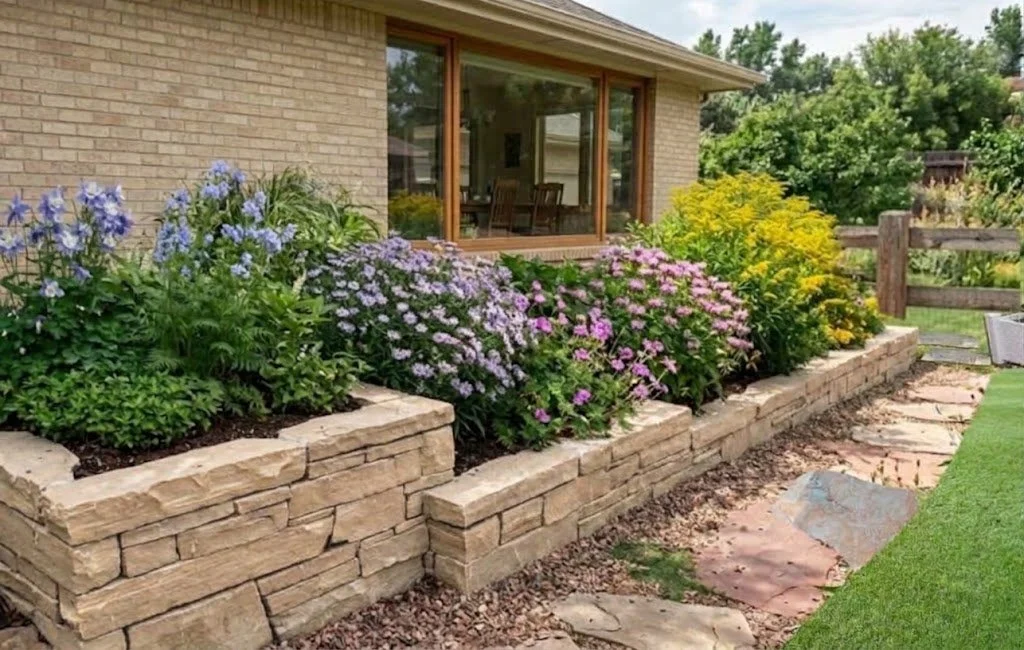
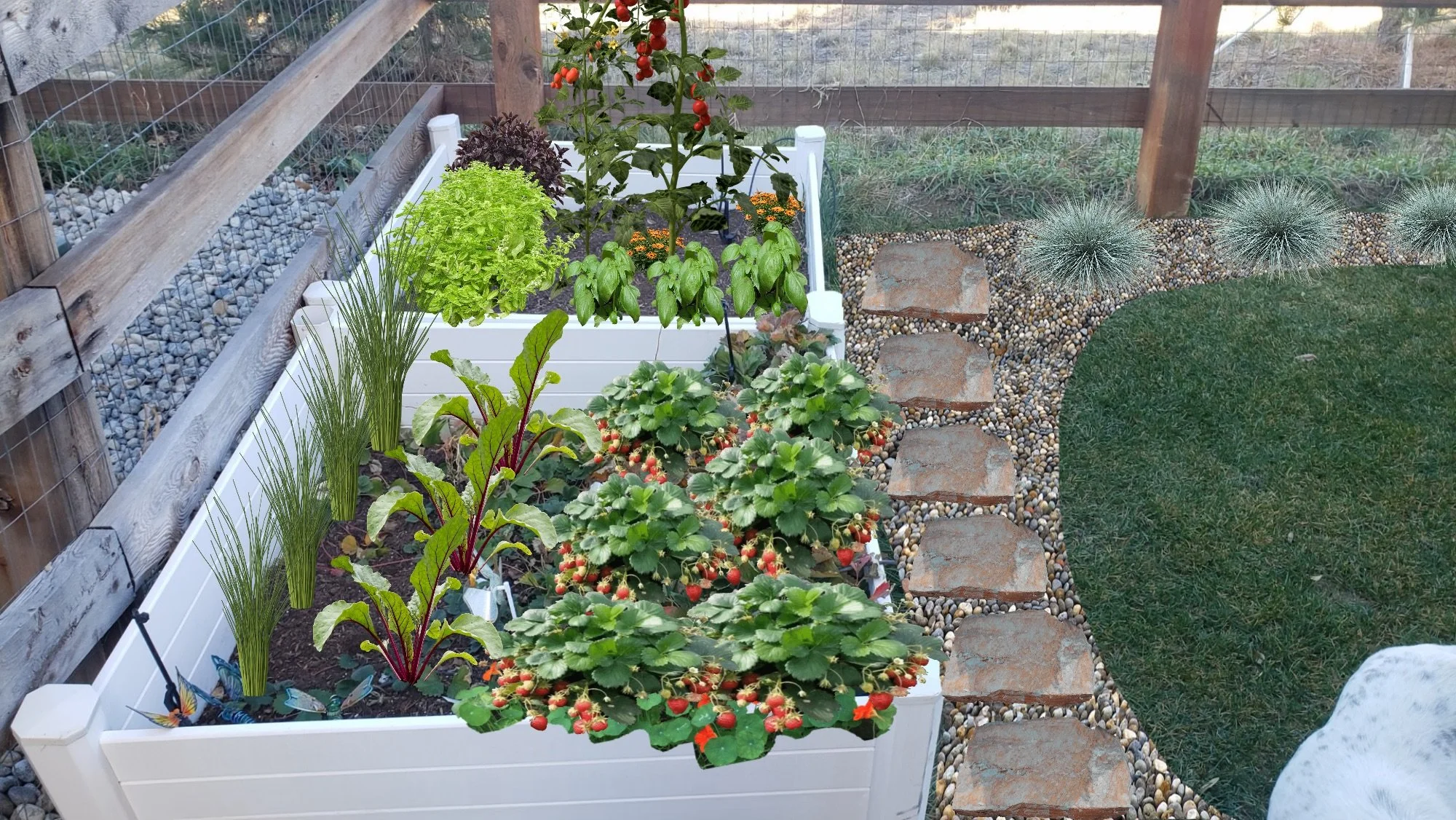

BACKYARD RAISED PLANTER BED
✅ 1 LONG RAISED PLANTER BED WITH 3 TIERS
✅ SHORT STEP STONE PATH
🚫 NOT INCLUDING: DRY WELL / DRIP / DRAINAGE
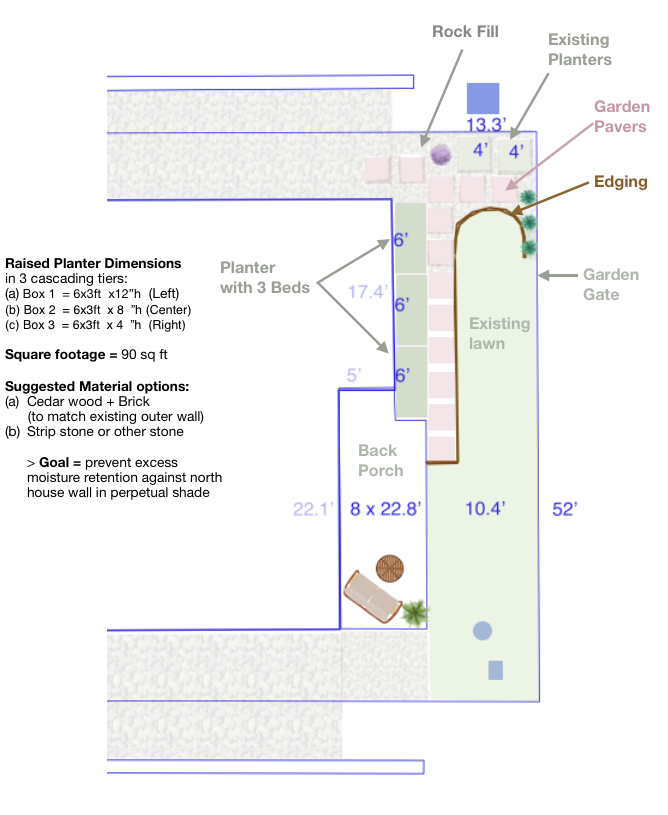
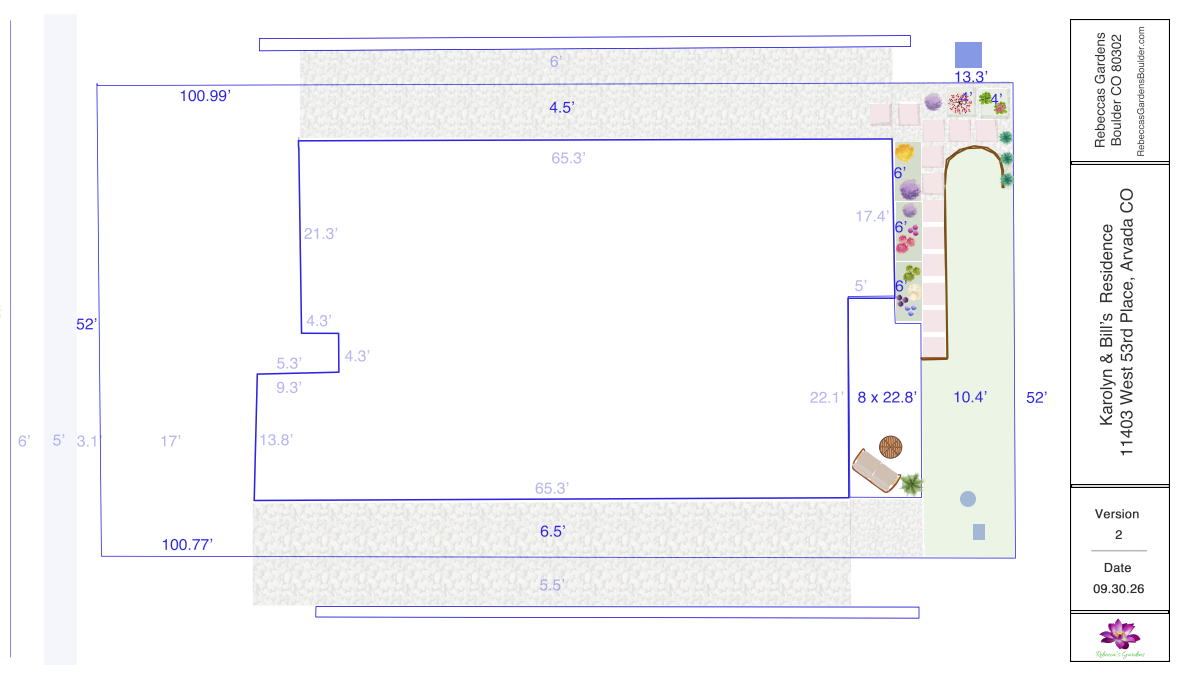
PROPERTY LAYOUT
BACK YARD FOCUS | HARDSCAPE RAISED BED

REQUIREMENTS
HOA
Garden space allotted = 108 sq ft per property
✅ PROPOSED BACKYARD TOTAL = 68sq ft
√ 36 sq ft = proposed long raised bed 18ft L x 2ft W at north wall
√ 32 sq ft = 2 existing square planter boxes 4x4 at NW corner
√ Compliant with HOA space allotted
FRONT YARD = ?
✅ Because the Haskins Station neighborhood is surrounded by developed roads, highways, and residential infrastructure rather than dense, continuous wild land timber or wild brush fields, it does NOT fall into a high-intensity Class 2 WUI zone.
√ Instead, the strict 0–5 foot planter bed and landscaping
compliance rules are driven by two factors:
Arvada's Unified Base Code: Arvada applies standard baseline ignition-resistant material rules to properties near transit lines or public open tracts to mitigate spot fires. [1]
HOA / Metropolitan District Guidelines: High-density townhome and patio home neighborhoods in Arvada commonly build stricter noncombustible landscape requirements (like rock borders and banned juniper plants) directly into their own neighborhood Design Review Guidelines. This is done to prevent a fire from easily jumping from one closely spaced building to the next, regardless of what the city's macro-level WUI map says.
SITE
✅ CURRENT RAISED BED MEASUREMENTS
(a) Box 1 = 6x5ft x 12”h (Far Left section)
(b) Box 2 = 6x5ft x 8”h (Center section)
(c) Box 3 = 6x5ft x 4”h (Far Right section**)
✅ LOCATION + MATERIAL
• PLACEMENT = UN ATTACHED at north wall of house
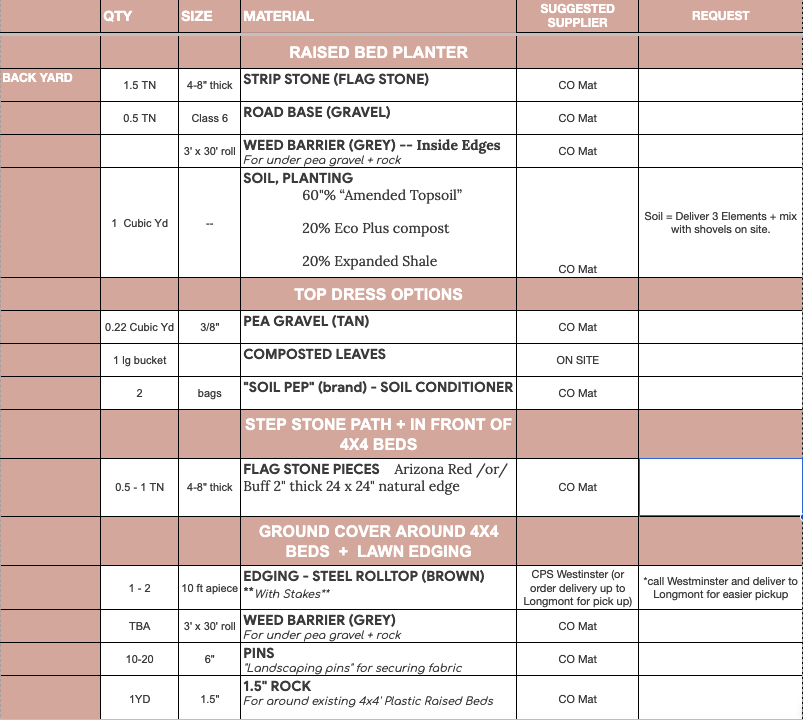
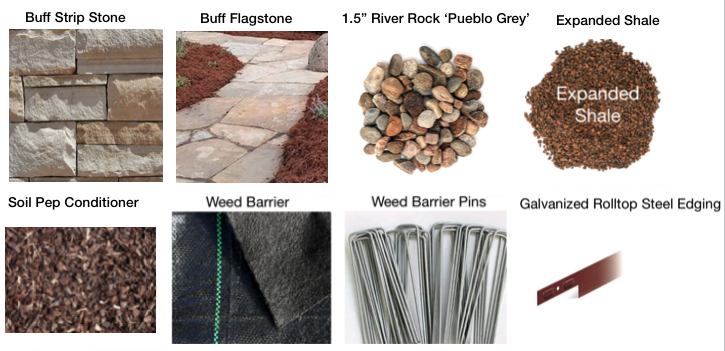
• MATERIALS = Strip Stone recommended
(for precise requested measurements above)
X Wood is not recommended within 5 feet of house footprint to comply with fire risk protocol
X Plastic, Trex, or Modular Kit is not recommended to achieve the specific footprint for the existing measured space

Recommended MATERIALS

recommended plants
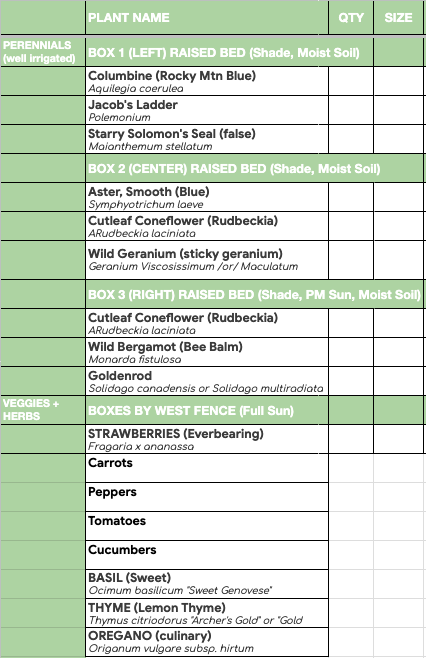
A MICRO CLIMATE APPROPRIATE PLANT LIST FOR YOUR UNIQUE RAISED BED GARDENS
Best guidelines for planting within 5 ft of the house:
1. Soil and Mulch Restrictions
Soil + Rock: Use dirt, pea gravel, or river rock as a top layer.
High Organic Soil Caution: Standard potting soil mixes with high concentrations of peat moss or shredded wood fibers can actually catch fire from windblown embers. Clean topsoil or mineral-heavy soils are required.
Mulch: It is recommended to refrain from using shredded wood bark, wood chips, or cedar mulch inside the planter bed. According to the mitigation guidelines, should embers land in the planter, wood mulch may easily ignite right next to your home's siding.
2. Plant Selection
Ideal Plants: Heavily irrigated herbaceous perennials, low-growing succulents,or fire-wise choices matching the Colorado State University Extension Firewise Plant Guide (typically plants with a flammability rating of 8, 9, or 10).
Not Recommended: Small evergreen shrubs (like dwarf junipers or arborvitae) or woody, resinous plants.
CREATING YOUR FLOWER BED THEMES
Because these groups have slightly different sunlight and drainage preferences, you can tweak how you use your soil and ground cover in each section to help them thrive!
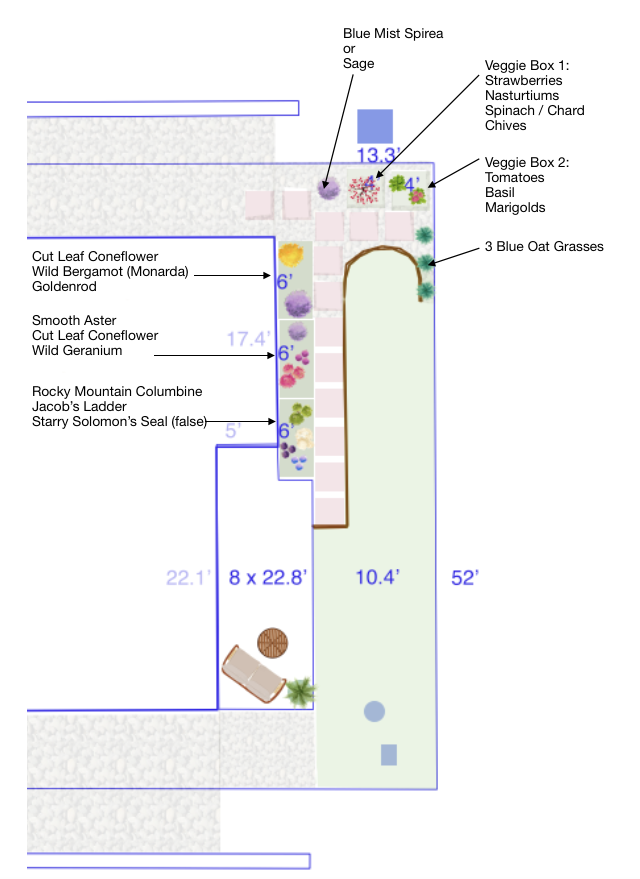
Bed 1: The Woodland Shade Bed
The Plants: Rocky Mountain Blue Columbine (Aquilegia coerulea), Jacob's Ladder (Polemonium), and Starry False Solomon's Seal (Maianthemum stellatum).
The Vibe: This is a classic, cool, montane forest floor community.
Soil & Care Tip: This bed will benefit the most from the organic, sponge-like moisture of a premium mix like Paonia Soil Co.'s Raised Bed Mix or a rich topsoil amended with Soil Pep. Jacob's Ladder and Solomon's Seal thrive on decaying forest organic matter.
Ground Cover Strategy: Since this is your shady, north-facing bed, a living mulch of Sweet Woodruff or Spotted Dead Nettle pairs beautifully here. They match the forest aesthetic perfectly and will keep the delicate, shallow roots of your Columbines safely insulated from summer heat.
Bed 2: The Moist Meadow Bed
The Plants: Smooth Blue Aster (Symphyotrichum laeve), Cutleaf Coneflower (Rudbeckia laciniata), and Sticky Wild Geranium (Geranium viscosissimum).
The Vibe: A lush, mid-elevation mountain meadow or stream-bank community.
Soil & Care Tip: Cutleaf Coneflower is a moisture lover that can grow up to 6 feet tall! To anchor these taller, robust root systems, use a heavier bulk loam base like the Pioneer Garden Mix. While they love moisture, the Aster and Wild Geranium prefer it to drain well, so ensure the soil doesn't turn into dense muck.
Ground Cover Strategy: These plants will likely grow tall and dense enough to naturally shade out the ground on their own by mid-summer (acting as their own living canopy). A thin 1-inch top-dress of Soil Pep here is ideal to keep the soil surface from crusting under the sun.
Bed 3: The Riparian / Pollinator Magnet Bed
The Plants: Cutleaf Coneflower (Rudbeckia laciniata), Wild Bergamot/Bee Balm (Monarda fistulosa), and Goldenrod (Solidago).
The Vibe: A vibrant, high-moisture prairie or wetland edge. This bed will be absolutely buzzing with native bumblebees and butterflies.
Soil & Care Tip: Wild Bergamot and Goldenrod are highly adaptable but thrive aggressively when given consistent moisture. Be aware that Monarda can be prone to powdery mildew if it gets zero airflow, so give these plants plenty of room to stretch out in the bed. A standard local topsoil blended with EKO Compost will give them the nutrient boost they need to fuel their heavy late-summer blooms.
Planting Layout Suggestion
When arranging them in your 18-foot beds, remember to place your Cutleaf Coneflower and Goldenrod at the very back or center, as they will easily tower over the others. Place the Jacob's Ladder, Columbine, and Wild Geranium toward the front borders so their delicate foliage and intricate flowers don't get swallowed up by the late-summer giants.
BEDS 4 + 5 (WEST FENCE):
SCHEDULE YOUR FavORITE Seasonal Veggies + Herbs


Got LANDSCAPE RESILIENCY?
get your custom guide
& Give your MAINTENANCE contractors the 411
they can check WHAT PRECISELY WE RECOMMEND on their mobile device while in the field
💡 Does your maintenance crew know really know what to do for your plants? What about the soil? Or other elemental essentials in the microclimate such as water, sun/shade, other nearby plants.
💡 Give your contractor a quick link they can check from their phone + easy DIY steps to follow — featuring professional recommendations + visual examples laid out by experienced horticulturists in an easy to follow step by step digital seasonal HOW TO guide!
💡Get immediate 24-7 access to custom direction for any maintenance schedule at any time of season
💡 Designed for basic care of Colorado’s most popular plants and microclimates for Xeriscape, Low Water, and Adapted themes
take a quick peek here at the
top 6 STEPS YOU CAN DO TODAY To jumpstart resiliency
included in your monthly membership guide . . .

How To Assess + Amend Your Soil
THE HEALTH OF YOUR PLANTS IS DIRECTLY RELATED TO THE QUALITY OF YOUR SOIL


Additional Natural Products
CLICK HERE FOR A FULL LIST OF RECOMMENDATIONS
for horticultural and vegetable gardens
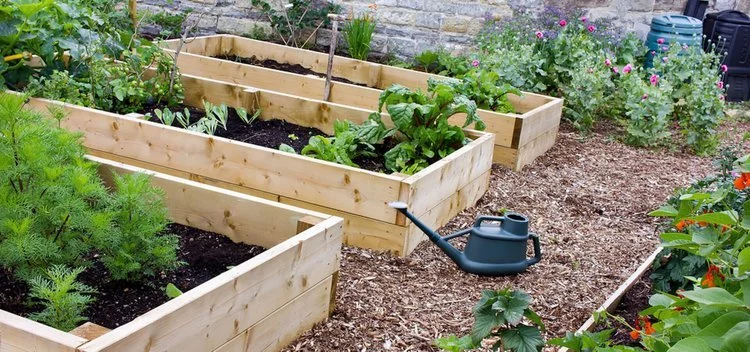

What To Do As Your Plants Grow

Optional DIY: Watch Others Do It + Then Try It Yourself
We Suggest The Following YouTube Channels As You Learn The Art/s Of…


Better Your Garden Game!
√ Get A Hand Getting Started With A 2 Month Pack
√ Meet Up Monthly To Garden Together DIY


Pick Plants That Support Your Trees: Fruit or Deciduous


Local Nurseries + Vendors We Recommend

Find your seeds or plant starts here, as well as tools, materials, and more! We’re pleased to share the health and the wealth of opportunity among these associations from our many professional and social circles. Rebecca’s Gardens Design makes it our goal to stay as consistent as possible with the larger picture holistic ecological values for plants, people, and our planet. Thank you for your commitment to sourcing biodynamic or organically grown plant species or varieties, soil, or other products.
INSTALLATION BY
A GOOD EARTH MAINTENANCE (AGEM)
Thanks for designing YOUR PROPERTY with Eco Gardens By Rebecca!
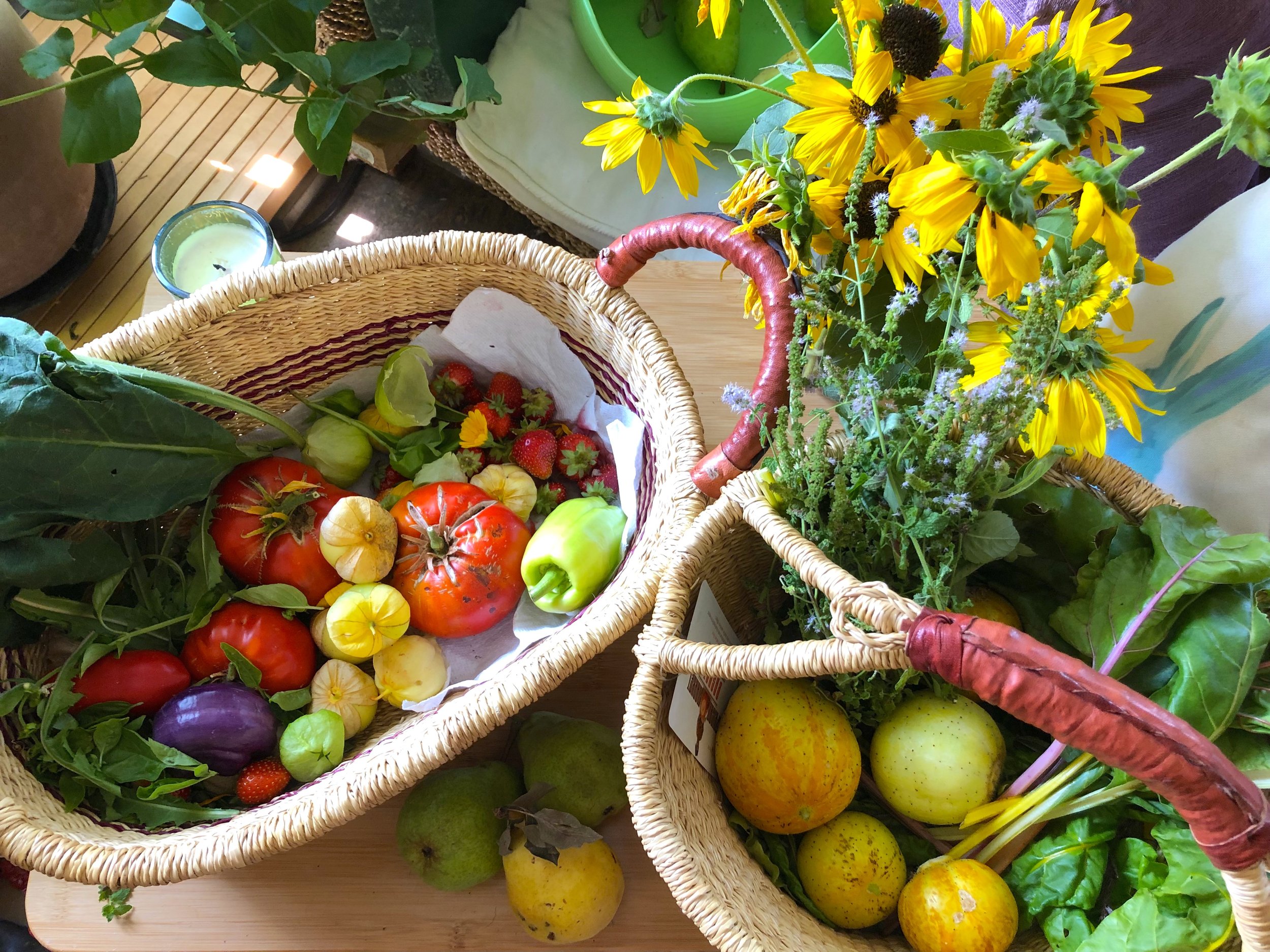
A Fun Harvest Mid-season
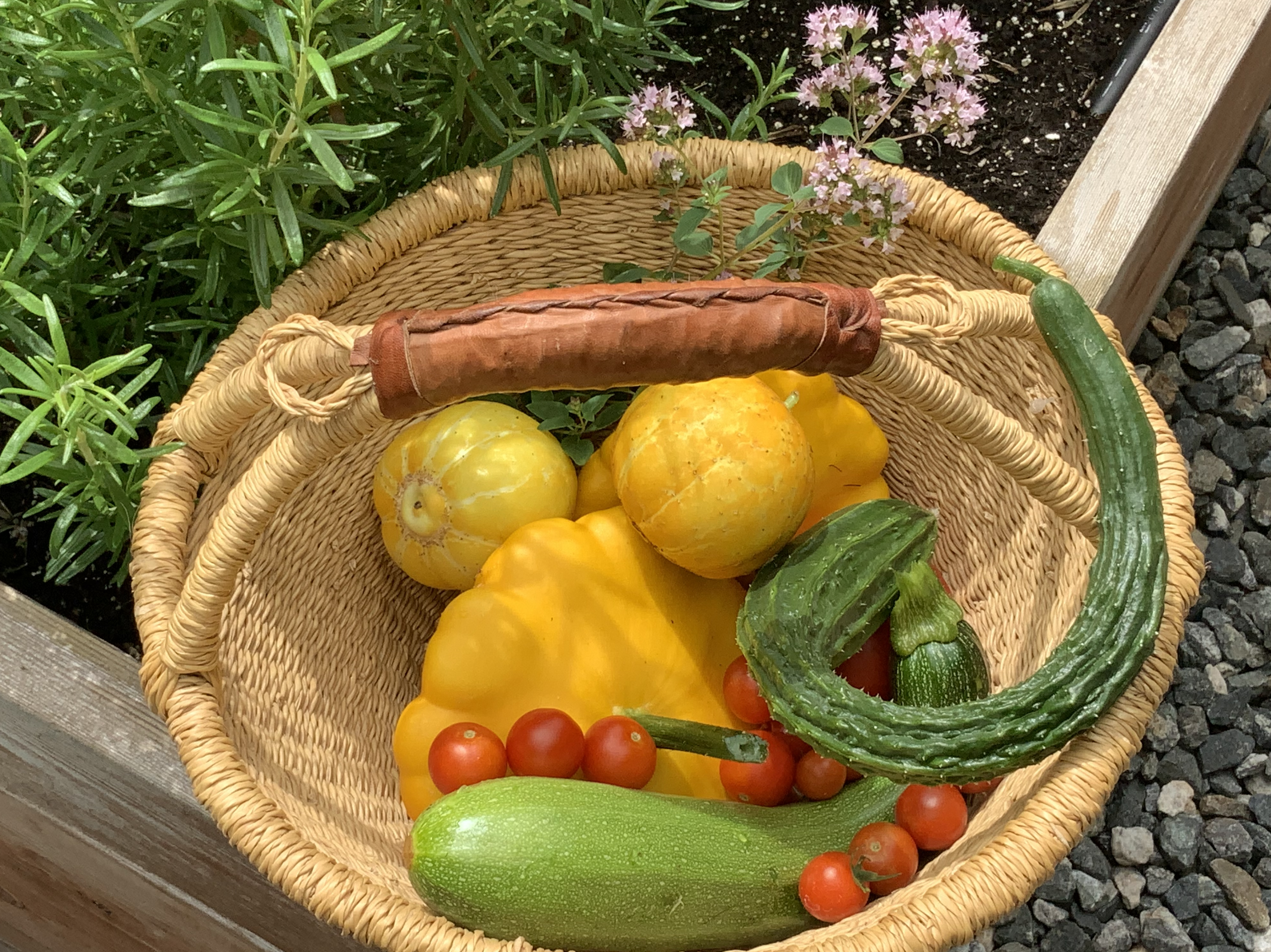


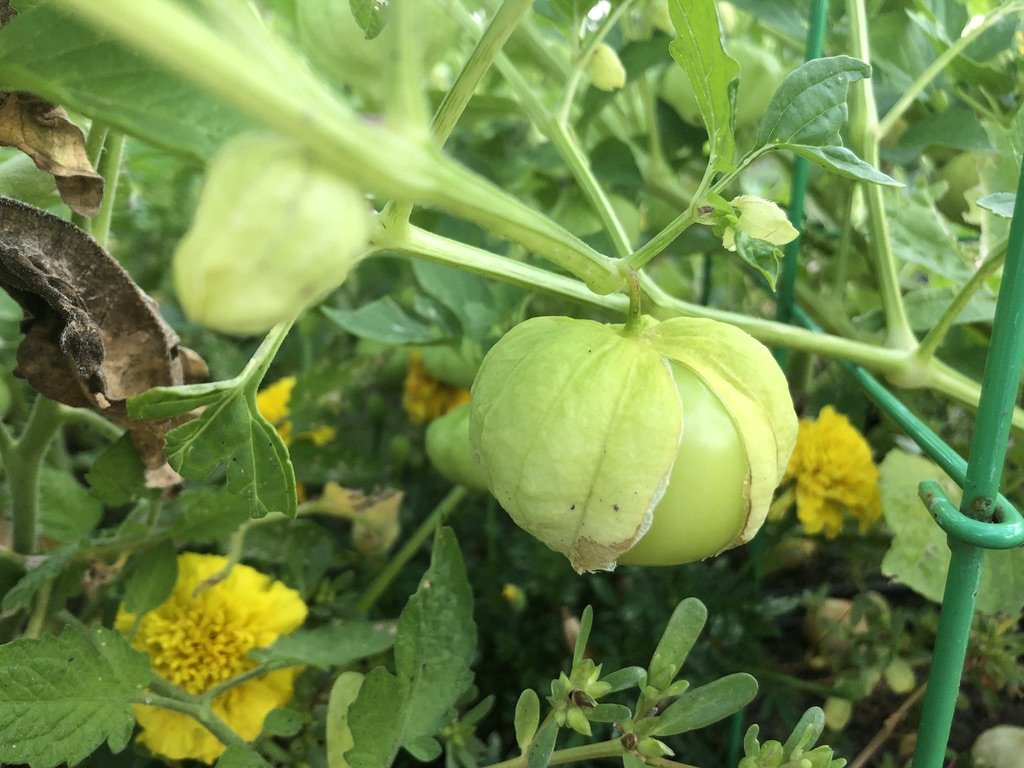
Tasty healthy food

Now that you have your garden installed … join us for a customized experience of learning how to engage your garden